
The Green Ark.
Empowering Young Thinkers
Imagine a generation of kids tackling climate change not with anxiety, but with creativity and logic. This is the goal of The Green Ark.
Elena | 20 May 2026
The challange
Existing environmental education resources offered valuable content but often relied on passive reading or fear-inducing narratives, lacking an interactive approach that empowers children to feel like active problem solvers.
The goal
Create an engaging collection of 6 interactive game-books for children aged 9–12, where readers learn and apply the Design Thinking methodology to solve real-world ecological challenges.
Unearthing the problem
An analysis of current children’s literature on ecology revealed a fragmented landscape. While these resources offered a wealth of environmental information, crucial gaps existed:
- Passive Engagement: Stories often told kids what to think rather than teaching them how to solve problems.
- Complex Methodology: Design Thinking is usually reserved for adults, with a total absence of simplified, kid-friendly frameworks.
- Eco-Anxiety: Emphasizing global crises without giving children actionable, structured mental tools often leads to a sense of helplessness.
A User-Centered Approach
We recognized the need for an interactive platform catering to young readers, merging narrative storytelling with practical cognitive development. The concept centers around Gaia and her friends traveling to different ecosystems in their bio-ship, the Green Ark, facing a distinct environmental issue in each book.
Facing the design obstacles
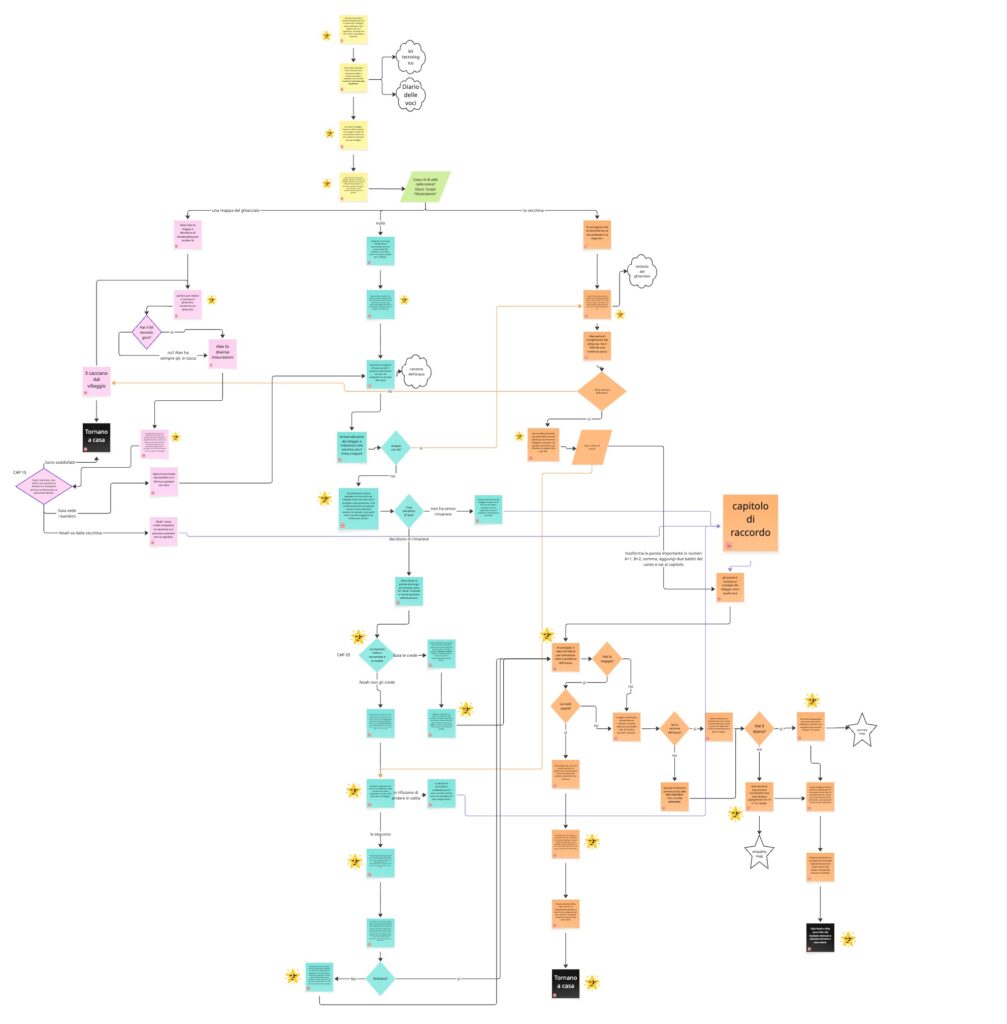
Translating a non-linear, choose-your-own-adventure format into print required strict structural discipline. Branching narrative paths had to perfectly mirror the chronological steps of Design Thinking without losing the fluid rhythm of the story.
Crafting a Supportive Experience
- Interactive Storytelling: Game-book mechanics allow children to make critical choices that directly impact the plot, boosting decision-making confidence.
- Methodology Integration: Each book in the 6-part series isolates and focuses on a specific step of Design Thinking (Empathize, Define, Ideate, Prototype, Test).
- Visually Engaging Universe: Hand-drawn illustrations and dynamic custom journals (like the "Carnet" or "Observation Journal") bridge the gap between reading and acting.
Building a Supportive Community
Future iterations will see the release of the remaining 4 books of the saga, expanding the reach of the independent platform and localizing the existing adventures into multiple languages to foster a global community of young problem-solvers.

The process
The narrative framework follows a structured journey. For the current volumes (such as the expedition to Nepal), the design process focuses on translating analytical steps into interactive story milestones:
Research & Empathy
Before jumping to engineering fixes, characters (and readers) must choose their approach. For instance, in the Nepal book, readers decide whether to pack the “tech kit” to measure glacier melt or the “observation journal” to interview locals and understand the human impact behind the water crisis.
Defining the True Problem
By tracking a line of children carrying heavy buckets instead of going to school, the protagonists discover that the crisis isn’t just mathematical; it’s social. The book forces readers to balance cold data with deep empathy, learning that water follows gravity, but solutions must follow people.
Prototyping Through Choices
The game-book architecture creates branching paths where structural choices act as the reader’s “prototype”. If a reader chooses a purely technical route, the story responds differently than if they choose to listen to the community’s cultural background, such as learning “The Water Song” (Canzone dell’acqua) to unlock local trust.
My takeways
- Bridge the cognitive gap: By creating a user-centered game-book, I proved that complex frameworks like Design Thinking can be seamlessly digested by children when wrapped in an empathetic narrative.
- Balance education and play: I tackled the challenge of marrying environmental accuracy with interactive entertainment, crafting a product that kids read by choice, not by assignment.
- Embrace independent limits: Managing the entire pipeline—from narrative writing and character illustration to Amazon distribution strategy—demonstrated how a self-contained, independent project can scale effectively.